
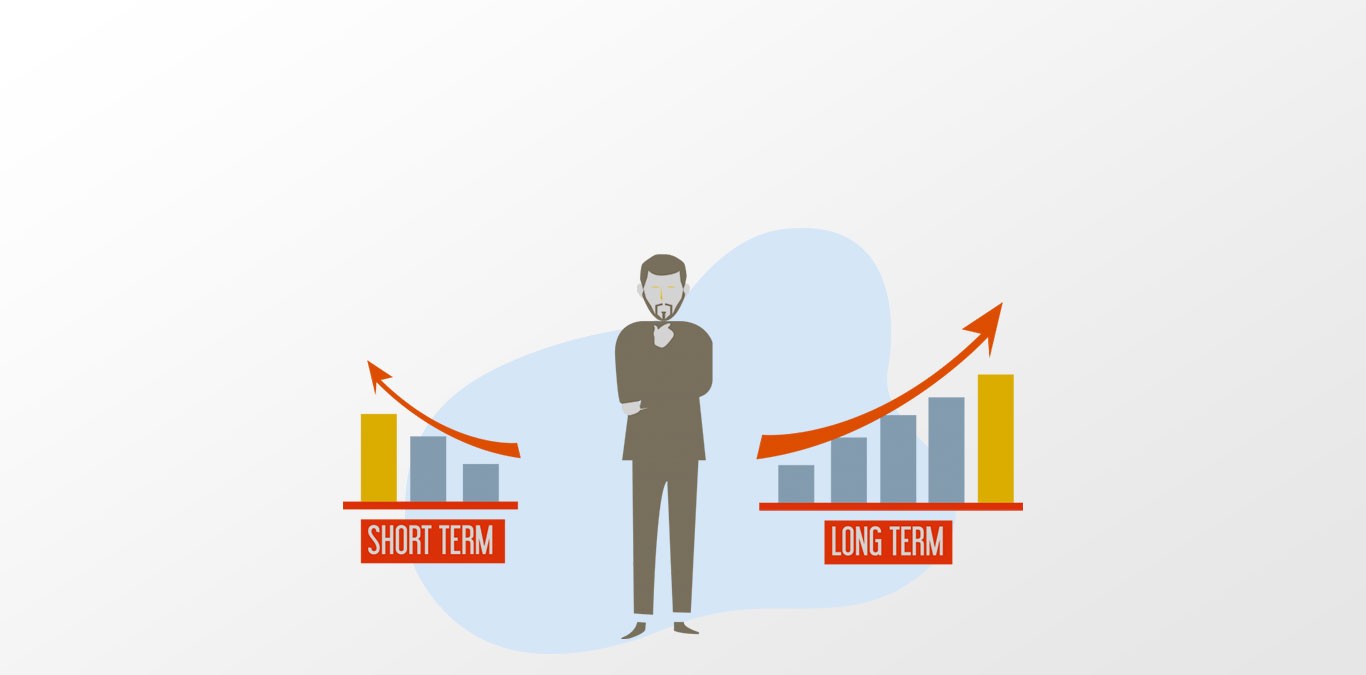
The race isn't always to the swift. In investing, consistency often beats frantic activity.
At the heart of every investor's journey lies a fundamental choice: chase quick gains through short-term trades or build wealth gradually with long-term holdings. While the excitement of rapid profits is alluring, decades of market data and investor psychology reveal a consistent truth about what actually creates lasting wealth. This isn't just about picking stocks—it's about choosing a philosophy that aligns with your goals, temperament, and the mathematical reality of how markets work.
The Core Difference: Time Horizon Defines Everything
The primary distinction between these approaches is the time horizon. Long-term investing generally means holding assets for 10 years or more, targeting major goals like retirement or a child's education. Short-term investing involves holding periods of three years or less, often for goals like saving for a vacation, wedding, or home renovation. This simple difference in timeframe creates a domino effect that influences everything from your choice of assets to your emotional experience.
The Strategy Showdown: A Head-to-Head Look
The Long-Term Investor
Planting seeds for a forest you may never sit under.
- Time Horizon: 10+ years
- Primary Goal: Growth & compounding over decades
- Typical Assets: Stocks, stock mutual funds, index ETFs
- Risk Approach: Can tolerate more market risk, using time to recover from downturns
- Psychology: Patience, discipline, focus on fundamentals
- Tax Treatment: Qualifies for lower long-term capital gains rates
The Short-Term Trader
Harvesting quick crops, watching the weather daily.
- Time Horizon: 3 years or less
- Primary Goal: Capital preservation or quick profits
- Typical Assets: CDs, money market accounts, Treasury bills, some speculative stocks
- Risk Approach: Prefers lower-risk options to preserve capital
- Psychology: Reactive, tactical, influenced by market noise
- Tax Treatment: Gains taxed as ordinary income (higher rates)
The Unbeatable Force: Compound Interest
This is the long-term investor's secret weapon. Compound interest is "interest on interest"—the returns your money earns begin generating their own returns. The effect starts slowly but becomes an unstoppable force over decades. A remarkable example shows that investing just $6.66 per day (about $200 monthly) starting at age 25 could grow to $1 million by age 65, assuming a 10% average annual return. Of that million, only $96,000 would be your contributions—the remaining $904,000 would be pure growth from compounding.
The Magic of Compounding Calculator
See how small, regular investments grow exponentially over time.
This illustrates the power of "time in the market" over decades. Past performance doesn't guarantee future results.
Understanding the Real Enemy: Volatility vs. Risk
This is where many investors get confused, often to their detriment. Volatility (the up-and-down price movements you see daily) feels risky but is often temporary discomfort. Risk is the actual probability of permanent capital loss. Long-term investors can tolerate volatility because they have time to recover. Short-term investors cannot afford this volatility because their timeframe is too brief for recovery.
Why Investors Confuse These Two Concepts
Volatility is Temporary Noise
What it is: Measurable price fluctuations driven by news, sentiment, and short-term events.
What it feels like: RISKY. Humans are wired to feel financial loss more acutely than gain.
The reality: For a quality asset, volatility is often just short-term discomfort, not permanent damage.
Risk is Permanent Damage
What it is: The chance of losing capital you never recover, often from structural issues like bad business models or excessive debt.
What it feels like: Often invisible. Low volatility can hide serious risk.
The reality: A portfolio can survive volatility; it cannot survive uncontrolled, permanent risk.
The Psychology Trap: Why Smart People Make Bad Short-Term Decisions
Your brain is not wired for investing. Cognitive biases like loss aversion (the pain of loss feels about twice as powerful as the pleasure of an equivalent gain) and recency bias (overweighting recent events) drive investors to sell during downturns and buy during rallies. A stark example from Hartford Funds compared two investors starting with $10,000 in 1984. The apprehensive investor moved $2,000 to cash every time the market dropped 8% in a month. The opportunistic investor added $2,000 during those same drops. By 2024, the opportunistic investor's portfolio was over $1.1 million larger.
Two Investors, One Market, Wildly Different Outcomes
The Panicked Seller
Reaction to Volatility: "This is too risky! I need to get out to protect what I have left." Moves money to cash during dips.
Result: Locks in temporary losses, misses the eventual recovery, and their portfolio stagnates.
The Disciplined Investor
Reaction to Volatility: "This is a normal market cycle. My long-term plan is sound." Stays invested or even buys more during dips.
Result: Rides out the storm, buys assets at lower prices, and benefits fully from the recovery.
The Taxman's Preference: A Huge Advantage for Long-Term Holders
This is the most concrete, mathematical advantage for long-term investing. The tax code actively rewards patience.
How Taxes Favor the Long Game
Short-Term Capital Gains
Holding Period: Assets held for one year or less.
Tax Treatment: Taxed at your ordinary income tax rate (which can be as high as 37% federally).
Impact: Significantly erodes your actual profit.
Long-Term Capital Gains
Holding Period: Assets held for more than one year.
Tax Treatment: Taxed at preferential, lower rates (typically 0%, 15%, or 20% federally).
Impact: You keep a much larger portion of your investment gains.
Key Insight: A successful short-term trader must outperform the market by a wide margin just to match the after-tax returns of a long-term investor in a simple index fund.
Finding the Right Balance for Your Goals
Most financial professionals don't advocate for an extreme all-or-nothing approach. The consensus is a core-and-explore strategy:
- The Core (90%+): A diversified, long-term portfolio of low-cost index funds or ETFs for your major life goals (retirement, financial independence). This is your automated, boring, wealth-building engine.
- The Explore (<10%): A small, separate "fun money" account for short-term trades or stock picking. This satisfies the itch to be active without jeopardizing your core financial future.
As Morgan Stanley suggests, this allows you to "pursue active trades without disrupting your overall plan". Your priorities should always come first: build a cash reserve, manage debt, and consistently save for retirement before considering any speculative short-term plays.
The Final Verdict: Time in the Market Beats Timing the Market
The evidence is overwhelming. While short-term trading offers excitement and the allure of quick riches, it comes with immense challenges: higher taxes, transaction costs, emotional stress, and the near-impossible task of consistently predicting market movements.
Long-term investing, while seemingly mundane, harnesses the most powerful forces in finance: compound interest, favorable tax treatment, and the historical upward trend of markets. It's not about picking the next hot stock; it's about making a commitment to a process and letting time work its magic.
Your most valuable investment asset isn't a specific stock or fund—it's time. Start investing in your future today, even with a small amount, and give that investment the one thing it needs most to succeed: years to grow.