Navigating retirement options is easier when you understand the different paths available. This guide is your roadmap.
With terms like 401(k), 403(b), IRA, Roth, and pensions, retirement planning can feel like you're trying to decode an alphabet soup designed by accountants. If you're among the 57% of Americans who feel behind on retirement savings, understanding these options is your crucial first step to catching up.
The good news is that every retirement account is built on a few simple principles: when you pay taxes, who can contribute, and how much you can save. This guide breaks down all the major retirement savings options for 2025 in plain English, complete with updated contribution limits and clear explanations of which accounts work best for different situations.
The Retirement Savings Reality Check
Before diving into the specifics, it's helpful to understand the broader landscape of retirement preparedness in 2025.
The Takeaway: Most people need multiple retirement accounts, and traditional pensions are becoming rare. Understanding all your options—especially workplace plans and IRAs—is essential for building adequate savings.
The Big Picture: Two Fundamental Types of Plans
All retirement plans fall into two main categories, a distinction established by federal law. Understanding this difference is key to knowing what to expect in retirement.
Defined Contribution Plans
How it works: You (and sometimes your employer) contribute to your own personal account. The eventual retirement benefit isn't guaranteed—it depends on how much was contributed and how well the investments performed.
Examples: 401(k), 403(b), 457(b), most IRAs.
You bear the investment risk and reward.
Defined Benefit Plans
How it works: Your employer promises you a specific monthly benefit in retirement, often based on your salary and years of service.
Examples: Traditional pensions, cash balance plans.
Your employer bears the investment risk. These are now rare in the private sector.
Your #1 Priority: Workplace Retirement Plans
If your employer offers a retirement plan, this should be the cornerstone of your savings strategy, especially if they provide matching contributions.
2025 Workplace Plan Contribution Limits
Standard employee contribution limit
Catch-up (Age 50+): +$7,500
Super Catch-up (Ages 60-63): +$11,250
For self-employed with no employees
Combined limit for employee + employer contributions. Allows for massive savings for business owners.
For small businesses
Catch-up (Age 50+): +$4,000
Employers must either match contributions or contribute 2% for all eligible employees.
Breaking Down the Workplace Plan Alphabet
401(k) Plans: The Most Common Option
Offered by most for-profit companies. You contribute via payroll deduction, often with pre-tax dollars (Traditional 401(k)) reducing your current taxable income. Many employers offer a Roth 401(k) option for after-tax contributions that grow tax-free. Key Action: Always contribute enough to get your full employer match—it's free money.
403(b) Plans: For Non-Profit & School Employees
Functionally identical to a 401(k) but offered by public schools, charities, churches, and other tax-exempt organizations. Also has Traditional and Roth options.
457(b) Plans: For Government Employees
Available to state and local government employees. A unique advantage: you can withdraw money penalty-free after leaving that job (even before age 59½), as long as you haven't rolled other retirement funds into it.
The Tax Question: Traditional vs. Roth
Many workplace plans and IRAs offer a critical choice: pay taxes now or pay taxes later. This decision hinges on whether you think your tax rate will be higher now or in retirement.
The Tax Timeline: Traditional vs. Roth
"Taxes Later" Strategy
- CONTRIBUTE: Use pre-tax dollars. Lowers your taxable income now.
- GROW: Investments grow tax-deferred.
- WITHDRAW: Pay ordinary income taxes on all withdrawals in retirement.
Best if you expect to be in a lower tax bracket in retirement.
"Taxes Now" Strategy
- CONTRIBUTE: Use after-tax dollars. No upfront tax break.
- GROW: Investments grow tax-free.
- WITHDRAW: Take money out tax-free in retirement (if rules are followed).
Best if you expect to be in a higher tax bracket or want tax-free income later.
Individual Retirement Accounts (IRAs): Your Personal Savings Powerhouse
An IRA is an account you open yourself, independent of an employer. It's the perfect next step after capturing your employer match, or your primary tool if you don't have a workplace plan.
2025 IRA Contribution Limits
Standard contribution limit
Catch-up (Age 50+): $8,000 total
Deductions may phase out based on income & workplace plan coverage.
Standard contribution limit
Catch-up (Age 50+): $8,000 total
Income Limits Apply: Ability to contribute phases out at higher incomes.
For self-employed & small businesses
Contribution limit is 25% of compensation or $70,000 (whichever is less). Only the employer (or self-employed person) contributes.
Special IRA Types to Know
Beyond the basic Traditional and Roth, there are specialized IRAs for specific situations:
Rollover IRA
When you leave a job, you can "roll" your old 401(k) into this type of IRA to maintain tax benefits and consolidate accounts. It preserves your savings and gives you more investment choices than most employer plans.
Spousal IRA
Allows a working spouse to contribute to an IRA for a non-working (or low-earning) spouse, helping couples maximize their retirement savings. It can be either a Traditional or Roth IRA.
Find Your Best Retirement Account Match
Answer these questions to get personalized recommendations for which retirement accounts you should prioritize.
Other Retirement Income Options
While less common, these vehicles can play a role in a comprehensive retirement plan.
Pensions & Annuities
Traditional Pension: Provides a guaranteed lifetime income but is increasingly rare. Benefits are often insured by the PBGC.
Guaranteed Income Annuity (GIA): Like a personal pension you buy with a lump sum, providing guaranteed monthly payments for life.
Health Savings Account (HSA)
The Triple Tax Advantage: 1) Contributions are tax-deductible, 2) Growth is tax-free, 3) Withdrawals for qualified medical expenses are tax-free.
After age 65, funds can be used for any purpose (paying only income tax if not for medical expenses), making it a powerful supplemental retirement account.
Your Action Plan: How to Prioritize Your Savings
With so many options, where should you start? Follow this proven savings hierarchy.
The Retirement Savings Priority Path
Get the Free Money First
If your employer offers a 401(k), 403(b), or similar plan with a matching contribution, contribute at least enough to get the FULL MATCH. This is an immediate 50-100% return on your money.
Max Out Your IRA
Next, contribute the maximum ($7,000 or $8,000 if 50+) to a Traditional or Roth IRA. This gives you more investment choices and favorable tax treatment. Choose Roth if you expect higher taxes later.
Return to Your Workplace Plan
Go back to your employer's plan and try to contribute up to the annual limit ($23,500 + catch-up if eligible). The high contribution limits make this crucial for serious savers.
Explore Specialty & Taxable Accounts
If you're self-employed, open a Solo 401(k) or SEP IRA. Consider an HSA for medical expenses. Once all tax-advantaged accounts are maxed, save in a regular taxable investment account for additional flexibility.
The Simple Truth About Retirement Accounts
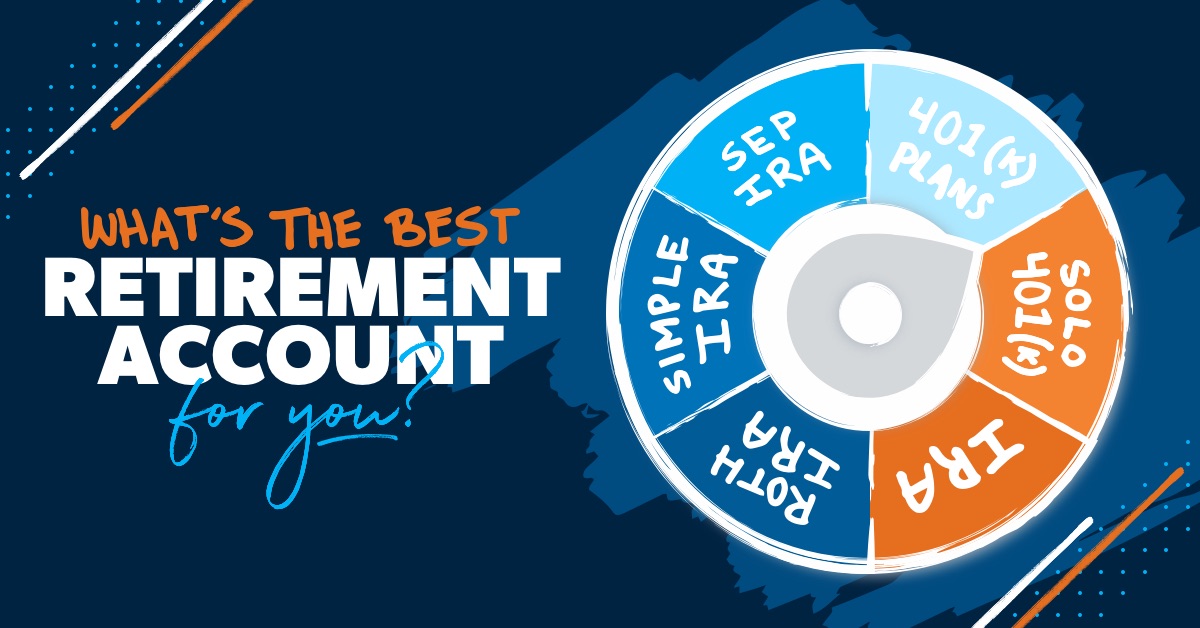
The "best" retirement account isn't a single product—it's the combination of accounts that maximizes your tax advantages and matches your employment situation. For most people, the winning formula starts with capturing an employer match, then funding an IRA, and finally maximizing workplace contributions.
Don't let the alphabet soup of options paralyze you. Start with one account—whichever one gives you free money through an employer match or offers the simplest path to start saving. The most important step is to begin. Consistency over decades, combined with the power of tax-advantaged compound growth, is what ultimately builds the retirement security you're seeking.